As we navigate through 2026, the landscape of aesthetic medicine has shifted dramatically. The era of aggressive surgical facelifts is being challenged by high-performance, minimally invasive alternatives. At the forefront of this revolution is the PDO Thread Lift 2026 standard.
For practitioners and medical spa buyers, understanding the current market demands for a non-surgical facelift and the technical evolution of PDO threads is no longer optional—it’s a business necessity. In this guide, we dive into the most searched topics of the year: longevity, efficacy, and procurement strategy.
1. The 2026 Shift: Why the Non-Surgical Facelift is Winning
The global PDO thread lift market is projected to reach $2.5 billion by 2035, with a significant spike observed in 2025 and 2026. Patients are increasingly searching for "natural results" and "minimal downtime."
Unlike traditional surgery, PDO threads offer:
Immediate Mechanical Lift: Visible results in under 45 minutes.
Biostimulation: Continuous collagen production as the thread dissolves.
Safety Profile: PDO is a material used in cardiothoracic surgery for decades, ensuring high biocompatibility.
2. Longevity: How Long Do PDO Threads Really Last?
One of the most frequently asked questions by buyers and end-users alike is about the duration of results. In 2026, clinical data suggests that while the threads themselves dissolve within 6 to 9 months, the lifting effect typically lasts 12 to 18 months.
This longevity depends on:
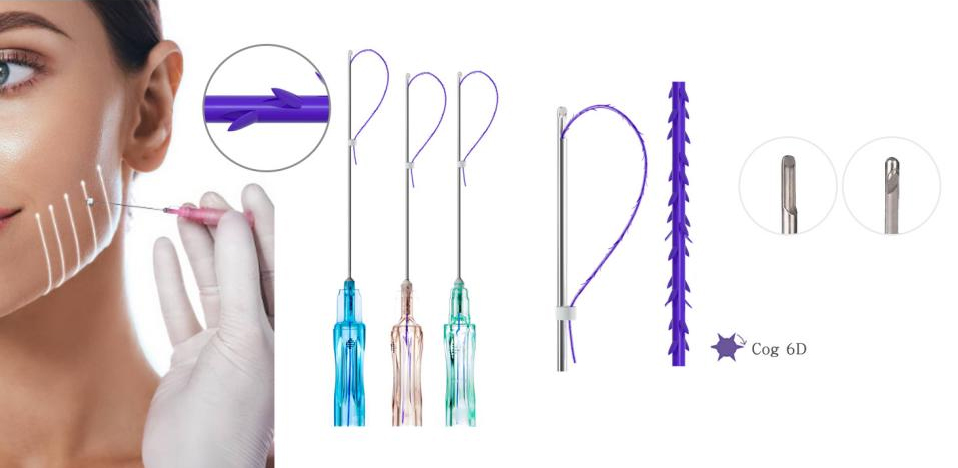
Thread Type: COG threads with multi-directional barbs provide superior anchorage compared to simple Mono threads.
Patient Metabolism: Faster metabolisms may dissolve PDO quicker, prompting some practitioners to explore PCL (Polycaprolactone) or PLLA (Poly-L-Lactic Acid) threads for even longer results (up to 2 years).
Technique: Vector-based placement ensures the lift withstands the forces of gravity longer.
3. The "2026 Protocol": Combination Treatments
The most successful clinics this year aren't offering PDO threads as a standalone service. The trending search topic is "Combination Aesthetics." By layering treatments, practitioners are achieving surgical-grade results without the scalpel.
PDO + Neurotoxins (Botox/Dysport): Relaxing the muscles before placement prevents the threads from being displaced by facial expressions.
PDO + Dermal Fillers: Using fillers to restore lost volume in the mid-face while using threads to lift the jawline.
PDO + Skin Boosters: Enhancing the surface texture while the threads handle the structural lift.
4. Buyer’s Guide: Maximizing ROI and Quality Sourcing
For the procurement specialist, 2026 is about finding the balance between cost and clinical reliability.
Key Factors for Sourcing:
Certifications: Ensure the supplier provides CE, FDA, or ISO certified products. In a market flooded with generics, certification is your clinical insurance.
Thread Diversity: A well-stocked clinic needs a mix of:
Mono Threads: For skin tightening and texture.
Screw Threads: For volumizing localized areas.
Cog/Barbed Threads: For heavy lifting of the neck and jawline.
Supplier Reliability: Look for manufacturers who offer consistent tensile strength and needle sharpess, which reduces patient bruising and improves recovery times.
ROI Analysis
With a provider cost ranging from
90 to 280 per package (depending on type and quantity), the ROI for a PDO thread procedure remains one of the highest in the aesthetic industry. A typical full-face lift can be priced between 1,500 and 3,500, offering significant margins for clinics that source efficiently.
Conclusion: The Future is Polydioxanone
The PDO thread lift has matured from a "quick fix" into a cornerstone of regenerative aesthetics. For buyers, the message is clear: focus on quality, educate on longevity, and master the art of combination treatments.
Are you looking to upgrade your clinic's thread offerings?
More News
Related products